the secret is to empower people – Nick Perlas

Life in Nuvali Philippines,

Amazing that while transcribing videos of Nicanor Perlas (global environmentalist and 2010 Presidential aspirant), I came upon one video that had him talking exactly about SMALL FARMER PRODUCTIVITY.

This was just a few days after I chanced upon an article by Jeffrey Sachs in which he says that the world’s top 8 countries (the G8) agreed to give $20B to help small farmers increase productivity.  Seems like a normal aid activity, but Sachs stresses that this “is a potentially historic breakthrough in the fight against hunger and extreme poverty,” adding that combined with other initiatives, it “could be the greatest step so far toward achieving the Millennium Development Goals… to reduce extreme poverty, disease, and hunger by half by 2015.

Empowering small farmers to solve world hunger and poverty.  Such a simple idea.  Could this be it? A real answer that is doable NOW?

How does this translate locally in any case?

Nicky Perlas in the video below briefly shares real, applicable solutions to agricultural productivity that have come from 40 years of working with farmers.  He studied, lived, and breathed agriculture–it is his great love.  And the best part is he presents them as a man who’s actually running for the highest office of the land.  Imagine having a president who understands, and one who understands really, and from the ground (he experienced it, still experiences it), that to help is to empower.

Nicky Perlas is the real deal. And this vision of empowering everyone, of including everyone is seen in every aspect of his candidacy– from his platform, to his dialogues with individuals and groups (from the grassroots to the national and even the global levels), and even to his manner of relating to his volunteers.  His slogan says it all–Tayong lahat Perlas.  The solution is in empowering EVERYONE.

Email me or visit nicanorperlas.com if you’d like to help empower others, and in the process empower yourself! \":)\"

*     *     *

Watch all videos of Nicky Perlas during the Mindanao forum held in Davao City last August 27, 2009 here. I included transcriptions of each video/issue for easier viewing. Issues discussed as follows:

1. Six Pillars of his Platform
2. Leadership for Mindanao
3. Economic Development and the Environment
4. Farm Land Conversion and Low Agricultural Productivity
5. Agriculture and Food Security
6. Philippine Education
7. Not Being Corrupt When Elected into Office
8. Indigenous Peoples Act of 1997
9. Indigenous Peoples Education
10. Business Investments in Mindanao
11. Future of the Youth in Mindanao
12. Bangsamoro Juridical Entity
13. Laws to Protect the Environment
14. Three Women’s Rights to Protect and Promote
15. On Another Woman to Become President
16. Peace Agreement with the MILF

\"Share\"/

jeffrey sachs on supporting small farmers

Farming and Gardening

A few weeks ago I watched a five-part BBC docu , How Art Shaped the World, which traced the roots of major themes of our modern lives—fascination with the female nude, death, exaggerated beauty—to traditions of the past that found expression in pottery, sculpture, images.

Found myself wondering why these ancient greats– Mesopotamia, Spain, Mexico, Portugal, Egypt– fell short of their promise and have become economic laggards today..  Is it a necessary to go up only to go down again? Egypt, for example, scaled the heights of power and conquest, and now, they’re among the world’s poorest.  My mom went there in 2008 and went home saying the cars on the streets of Cairo were jalopies, worse than in Manila.

 Jon told me to read Jeffrey Sachs’s “The End of Poverty” to understand why the rich countries are rich, and the poor countries poor. Great especially for non-economists.  And it has a foreword by Bono. \";)\"

Have yet to get a copy of that book, but today I came across Jeffrey Sachs in goodplanet.info, where he makes a case for small farmers and why aid should focus on them: “The G-8’s $20 billion initiative on smallholder agriculture, launched at the group’s recent summit in L’Aquila, Italy, is a potentially historic breakthrough in the fight against hunger and extreme poverty,” adding that combined with other initiatives, it “could be the greatest step so far toward achieving the Millennium Development Goals… to reduce extreme poverty, disease, and hunger by half by 2015.”

Sachs defines “smallholder farmers” as peasant families that work on farms one hectare (10,000 sqm or 2.5 acres) or less in size. To put that into context, Serendra in the Fort is 12.5 hectares in size, equivalent to 12.5 farm households.

It’s not rare to hear someone say that the poor should just stay home or go back to the provinces and plant in their fields—at least they’ll have something to eat and won’t go hungry. Is the solution really as simple as this? Sachs says that:

[Smallholder farmers] are some of the poorest households in the world, and, ironically, some of the hungriest as well, despite being food producers…They are hungry because they lack the ability to buy high-yield seeds, fertilizer, irrigation equipment, and other tools needed to increase productivity. As a result, their output is meager and insufficient for their subsistence. Their poverty causes low farm productivity, and low farm productivity reinforces their poverty. It’s a vicious circle, technically known as a poverty trap.

Getting seed and fertilizer to smallholder farmers at highly subsidized prices (or even free in some cases) will make a lasting difference. Not only will food yields rise in the short term, but farm households will use their higher incomes and better health to accumulate all sorts of assets: cash balances, soil nutrients, farm animals, and their children’s health and education.

That boost in assets will, in turn, enable local credit markets, such as micro-finance, to begin operating. Farmers will be able to buy inputs, either out of their own cash, or by borrowing against their improved creditworthiness.

How serious is this new insight? How relevant is it to us Pinoys, who have so much arable land but so much poor?

\"Share\"/

Have you seen “Home”?

Sustainable Living

Made my family watch “Home” over the weekend.  It’s a quiet documentary on the state of the Earth, with aerial shots of mountains, forests, cities, farmlands filmed by French photographer Yann Arthus-Bertrand.  Beautiful vistas, worth a look even for just the visual treat. It has been translated into 20 languages and was released simultaneously in cinemas, on television, on DVD and on Internet in over 50 countries around the globe on June 5th 2009 the World Environment Day.  The English version is narrated by Glenn Close.  Watch it on youtube.

Arthus-Bertrand says on the Home Project site:

We are living in exceptional times. Scientists tell us that we have 10 years to change the way we live, avert the depletion of natural resources and the catastrophic evolution of the Earth’s climate. The stakes are high for us and our children. Everyone should take part in the effort, and HOME has been conceived to take a message of mobilization out to every human being. For this purpose, HOME needs to be free. A patron, the PPR Group, made this possible. EuropaCorp, the distributor, also pledged not to make any profit because Home is a non-profit film. HOME has been made for you : share it! And act for the planet.

I’ve seen it three times now, still has the same effect- a paring down of wants,a push for a frugal, efficient lifestyle that’s more and more local-minded but inclusive of the greater world out there.   “Home” is a multimedia platform pushing a green advocacy: Our Earth is dying. It’s too late to be a pessimist. Bertrand shares on goodplanet.org:

Since 1990 I have flown over one hundred countries around the world. Extraordinary aerial views of nature and descriptive texts invite all of us to reflect upon the our planet’s evolution and its inhabitants’ future.

Can you imagine… ? In just 50 years mankind has modified Planet Earth’s environment faster than in the whole history of humanity ! As Earth’s ecosystem worsens, nature is expressing its violent anger : fresh water, oceans, forests, air, climate, arable land are all diminishing drastically.

Just today I actually did as the movie suggested and visited goodplanet.org, which is an umbrella site for all of Bertrand’s initiatives (ang dami!!!), but was frustrated that most of the content I was looking for was in French.  Kept clicking away and found his main site yannarthusbertrand.org, which has more navigable content for English speakers, including downloadable wallpapers of aerial shots in 100 countries (Philippines included!).

\"\"

Image shows the Village of Bacolor under a layer of mud, the island of Luzon, Philippines (14°59’ N, 120°39’ E) after the Pinatubo eruption:

In 1991 the volcano of Pinatubo, on the island of Luzon in the Philippines, began to erupt after nearly six centuries of dormancy, projecting a 66-million-cubic-foot (18-million-cubic-meter) cloud of sulfurous gas and ash to a height of 115,000 feet (35,000 m) and destroying all life within a radius of 9 miles (14 km). In the days that followed, torrential rains from a hurricane mixed with ashes scattered over several thousand kilometers, causing devastating mudflows, which engulfed whole villages. Before the cataclysmic eruption on June 15, 1991, the evacuation of 60,000 people limited casualties to 875 dead and 1 million injured. Close to 600 million inhabitants of our planet live under the threat of volcanoes, but despite their force, volcanic eruptions are not the deadliest threat to humans. In the past fifteen years, 560,000 persons perished from major natural catastrophes (120,000 in 1998 and 1999 alone); 15 percent of the deaths were due to storms, 30 percent to earthquakes, and half to floods—a natural phenomenon that has become even more devastating as a result of human intervention in the environment.

More aerial shots of the Philippines here.

Another gem I came across: an actual teaching guide for use with the film!  A free, downloadable DVD includes the 90min version of the film and other tools to help “pass on the torch”:

…created for teachers and youth workers to help them decipher the movie with children and teenagers and educate them on the environmental side of the film as well as the artistic side.
The tools were conceived as guidelines for the audience to approach the film in a progressive way and educational sheets refer to key scenes of the film. Using the film as a starting point, it is therefore possible for children over 9 years old to tackle a citizen debate or study geographical, historical, philosophical, scientific, literary or musical matters in groups.

The Home-education DVD is available for free from www.milan-enseignants.com/home
It can also be viewed and downloaded from www.home-educ.org

Made for free distribution all over the world, teaching aids for educators who want to use the film in the classroom are available in multiple languages in home-educ.org. A printable English PDF is also available (2.4mb), well-worth the download–exhaustive with actual lesson plan suggestions, breakdown of sequences, etc.  Such an amazing and generous treasure chest of information!!

Would be great for every school (and family!) in the Philippines to have this.

More on concrete steps towards a low-impact Pinoy lifestyle later.

For more info, visit:
Goodplanet.org (in English)
Goodplanet.info (in English)
Goodplanet facebook group

\"Share\"/

permission to dream

Uncategorized

dream and let dream
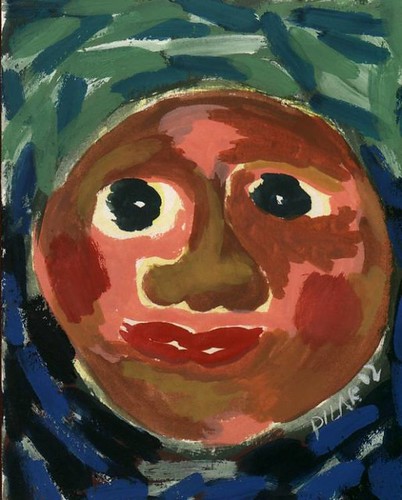
Dream and let dream, Gouache on paper, 2005

“When I snoop into the lives of artists I admire, I generally find people who at one time or another have taken charge of themselves and given themselves some sort of permission to act on their dreams.” -Robert Genn

I’ve been receiving twice-weekly letters from Canadian artist Robert Genn since 2005, and for the first time, I’m quoting him and not another artist he mentions in his letter (Managerial Mode) … 🙂

The permission to let ourselves chase after our dreams– sometimes it’s a neglected aspect of being a dreamer. But so much so is it critical. The subtle acceptance, and celebration, that yes, I am allowed to live the way I want to, and allowed by me! Wow! And not because I’ve earned it (maybe not yet), but just because!

This gentle shift may just be the missing link in turning dreams into palpable everydays. Maybe it’s the official start, when our eyes see the fine threshold that separates our now–where we stand dreaming–and our possibility–where we actually live and breathe the dream, and when we actually cross it, paying our toll fee by asking permission.

Because with permission necessarily comes asking. And we seldom ask permission nowadays. How often do we use “May I” vs “Can I”? There’s a sense of entitlement in Can– for as long as we work hard, we earn our keep. In Spanish, “Can I?” is puedo, which actually means “Am I able to?” It speaks of action, ability, of something we can direct. “Can do” statements are powerhouse affirmations for positive thinking and are just as essential to dreaming, but without the gentler “May I?”, the process is incomplete. “May I” uses the Spanish conditional, podria— polite and hopeful, aware of the genuine risk of being turned down (it’s not up to us!).

May I be happy?
May I get rich?
May I be a great daughter, sister, mom, wife, friend?

What do you have to ask permission for?

greed

Uncategorized

ano?
Gouache on paper, 2002

Why would men so mismanage their lives? Greed, he thought, was what ruined so many. Greed–that desire to crowd into a moment all the enjoyment it would hold, to squeeze from the hour all the emotion it would yield.

– Paz Marquez-Benitez, Dead Stars

How guilty are we of this? Of savoring every moment, milking it for all it’s got. How could such an attempt be so bad? I’ve never thought of it as greed before… it was, for me, part of being Present, of taking in what was to be taken, of letting up and letting what’s before us engulf us and do its thing–whether it’s to pass through or permeate our insides. But could there really be such a thing as stepping over the line, as taking too much from an encounter, a kodak moment, a memory?

Is that what it means to restrain, and beautifully so?

🙂

do you want to wake up?

Uncategorized

the iguana will bite those who don't dream
The iguana will bite those who don’t dream, Gouache on paper, 2002

“Your vision will become clear only when you look into your heart. Who looks outside, dreams. Who looks inside, awakens.” (Carl Jung)

I’ve always found refuge in calling myself a dreamer–it takes me places and lights up my eyes, instantly. And other self-hailed dreamers also make for easy (sometimes lasting), instant friends…

Last year, I saw an RCBC billboard that said “Dreams should have a deadline” (read here). Was very moving for me, because it necessarily pushed and snapped me out of the floating comfort zone that was “looking outside”.

When we go inside ourselves and ask the questions that need to be asked, what happens? And what do we lose when we don’t?

Let’s wake up… it’s time..

🙂

how do artists spend their everydays?

Uncategorized

my desk right now
My desk in 2006

A friend pointed me to Daily Routines, a site on “how writers, artists, and other interesting people organize their days.”

Very interesting, not to say inspiring, to get a peek into creative people’s creative processes. What really goes on in the everydays of great artists? It’s creative stalking– being let in on secret lifestyles that follow no real order or structure. I’m reminded of the Blink premise– take 10 minutes to look at a person’s living space and you’ll have a pretty reliable gauge of who or how that person is.. And they do say genius art is not a show of skill as much as it is an extension of the artist’s personality… …

our penchant for nostalgia

Uncategorized

star wars
Star Wars, Oil pastel on paper, 1999

“We seem to be going through a period of nostalgia, and everyone seems to think yesterday was better than today. I don’t think it was, and I would advise you not to wait ten years before admitting today was great. If you’re hung up on nostalgia, pretend today is yesterday and just go out and have one hell of a time.” ~Art Buchwald

Saw this quote while blog hopping..

Makes sense, to be told or scolded for being too dependent on nostalgia, especially to me– I’ve caught myself holding on to memories many times, and maybe worse, even admiring books or art that elicit nostalgia about things that have yet to happen..

Here’s to the now!

our tagaytay garden in bloom!

Slow Travel

\"\"
Only two months ago, these bushes were low and mostly flowerless.. What a surprise to see them in overgrown mode! There must be something about Tagaytay rain– ang lulusog ng halaman!

Taken by my brother, Pete on Sept. 23, 2008.

More pics here.

Other Tagaytay pics:
Hardwood Furniture in Tagaytay
On the Way to Tagaytay, March 13, 2008
Meet my Lions!

Breakfast at Antonio’s
Tagaytay QT with Mom and Dad at Breakfast at Anotnio’s, January 31, 2008

Sonya’s Garden
Midweek Tagaytay recharge, June 26, 2007, Tuesday

Flower Power
Inspiration for Tagaytay House

Our house for sale

\"\"

Click here for more info on our house

\"Share\"/

Manos Greek Taverna

Slow Travel,

\"\"

I first visited Manos Greek Taverna with two girl friends over a year ago. Always with a soft spot for anything homemade (i.e. made with love), I’ve since listed it as a Tagaytay favorite.

A greek-style carinderia, Manos is a roadside restaurant along the main Tagaytay road (on the opposite side of the ridge) about a minute away from the rotonda.

I really did feel very My Big Fat Greek Wedding-ish the first time I saw those blue and white curtains and tablecloths, not to mention the matching music and paintings of Greek beaches and houses. Add to the scene Manos himself, the place’s most Grecian import, who is such a cheerful and hands-on owner! He’s usually seen grilling meats and preparing dishes in the kitchen himself.

\"\"

The only disappointment I’ve ever had here is they don’t serve hummus, but just last month I discovered the perfect alternative: fish roe dip, also served with pita.

Other musts: Dolmades (steamed rice in grape leaves with yogurt dip), Gyros, Grilled chicken, yogurt with fresh honey (from Ilog Maria)

Why the place is charming: The menu offers, before anything about the food, a detailed romp through food history and the place of Greek cuisine in it. Talk about pride and passion for one’s work (told you I’m a sucker for “heart”)!

\"\"
Grilled chicken with real smoked flavor

\"\" \"\"
Yogurt with fresh honey and pistachio bits

\"\"
Baklava

\"\"
Bill for 5 full stomachs \':)\'

\"Share\"/

Yumm fresh milk at Mr. Moo’s

Slow Travel,

\"\" \"\"
I first heard of Mr. Moo’s when a friend pointed it out on the way to Punta Fuego last year. She said her dad just looooves their fresh carabao’s milk.

Early this year, finally decided to give it a shot– and I regret not having given in sooner! The chocolate carabao’s milk was exactly like the one we used to buy at the gas station near UP Los Banos as kids. Totally had a ratatouille moment when I had my first sip. Haaaaayyy.

Packaging is cute in rounded plastic containers, which the salesboy will cover with ice and newspaper if you’re ordering for take out.

\"\"

Available are fresh cow, carabao, and goat products: (milk in 200ml and 1L), pastillas, kesong puti, ricotta cheese, yoghurt, soap. Also soy milk, tiny pan de sal. Wholesale prices available for orders of 10 pieces or more.
Mr. Moo’s can be found on either side of the Sta.Rosa-Tagaytay road. If going to Tagaytay, you’ll see it on your right after the road access to Lagusan Drive and before Casa Marcosa and the Tagaytay City Palengke. If Manila-bound, you’ll see it on your right a few meters past Leslie’s Too. See map.

\"Share\"/

a billboard I dont mind seeing everyday

Everyday Life

Reminds me of something I read before: dreamers are meticulous– all the dream details are planned out because the biggest plan of all is to make the dream come true.

We should have designated “national vision boards” lining our main streets, with only one purpose: to inspire. Think EDSA with orderly traffic, Buendia with no jaywalkers, C5 with no ugly pink barricades. The visuals should be immediate or applicable instantly… like images of drivers smiling behind the wheel posted in spots prone to accidents or rude driving (bottlenecks, major intersections with no traffic lights, etc), or pictures of people lining up without fuss plastered outside MRT ticket booths.